You have the skills. Your qualifications match the role. The interview felt promising. Then comes the rejection email.
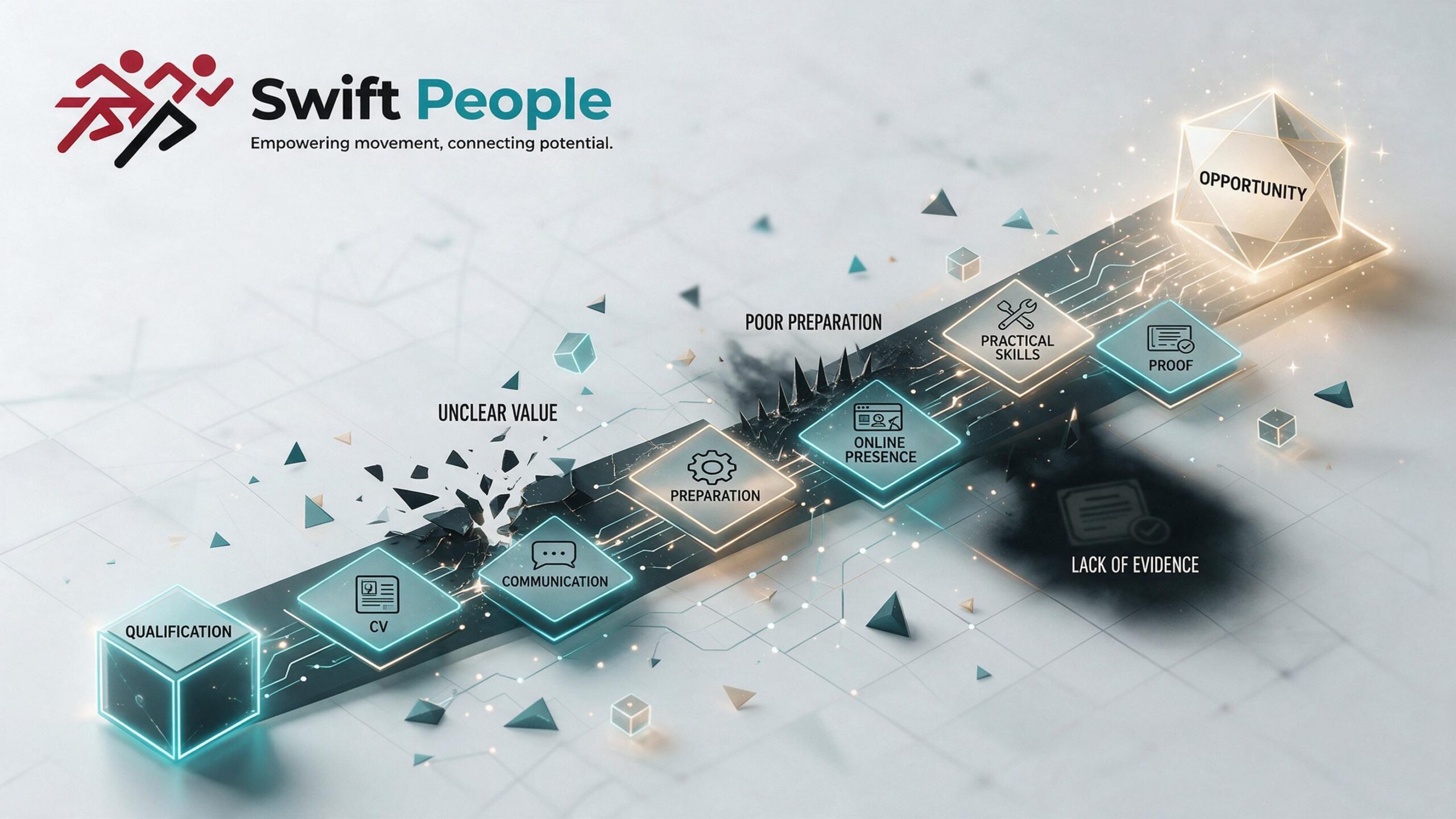
Being qualified does not always mean being hired. The difference often comes down to how clearly you communicate your value, demonstrate your skills, and position yourself professionally.
Why Qualified Candidates Get Rejected
1. Your CV Does Not Communicate Value
A CV should show more than responsibilities. It should demonstrate impact.
Instead of “Conducted manual testing,” show what you achieved, improved, or contributed.
Tailor your CV to each role and highlight the experience most relevant to the position.
2. You Cannot Clearly Explain Your Experience
Technical ability is important, but employers also need to understand how you think, solve problems, and communicate.
Know your projects well enough to explain:
- What you did
- Why you did it
- Challenges you faced
- Decisions you made
- Results you achieved
Doing the work and explaining the work are different skills.
3. Your Online Presence Creates Doubt
Your LinkedIn, portfolio, and GitHub should support what you claim on your CV.
Inconsistent or outdated profiles can weaken credibility.
Consistency builds trust.
4. You Are Not Demonstrating Workplace Fit
Employers assess more than technical skills. Communication, collaboration, accountability, adaptability, and openness to feedback also matter.
Show how you work with others, not just what tools you know.
5. You Are Underprepared for Interviews
Research the company, understand the role, prepare relevant examples, and practice communicating your experience.
Preparation signals professionalism.
6. Your Career Story Is Unclear
Career changes and employment gaps are not automatically negative. What matters is how you explain them.
Connect previous experience, transferable skills, learning, and career decisions into a clear story.
7. You Have Skills but No Proof
Claims are weaker than evidence.
Build portfolios, projects, GitHub repositories, case studies, or practical assessments that demonstrate what you can actually do.
Proof matters.
What You Can Do Differently
- Build a CV focused on impact
- Practice explaining your experience clearly
- Strengthen your LinkedIn and portfolio
- Research every company before interviewing
- Build practical projects that prove your skills
- Get feedback through CV reviews and mock interviews
How Swift People Helps
Swift People helps professionals close the gap between being qualified and being ready to compete effectively.
Our support includes:
- CV and portfolio development
- Interview preparation
- Professional branding
- Career-focused Academy programs
- Community and mentorship
You may already have the skills. The next step is learning how to communicate, demonstrate, and position them effectively.
Swift Talent. Seamless Integration. Superior Quality.